

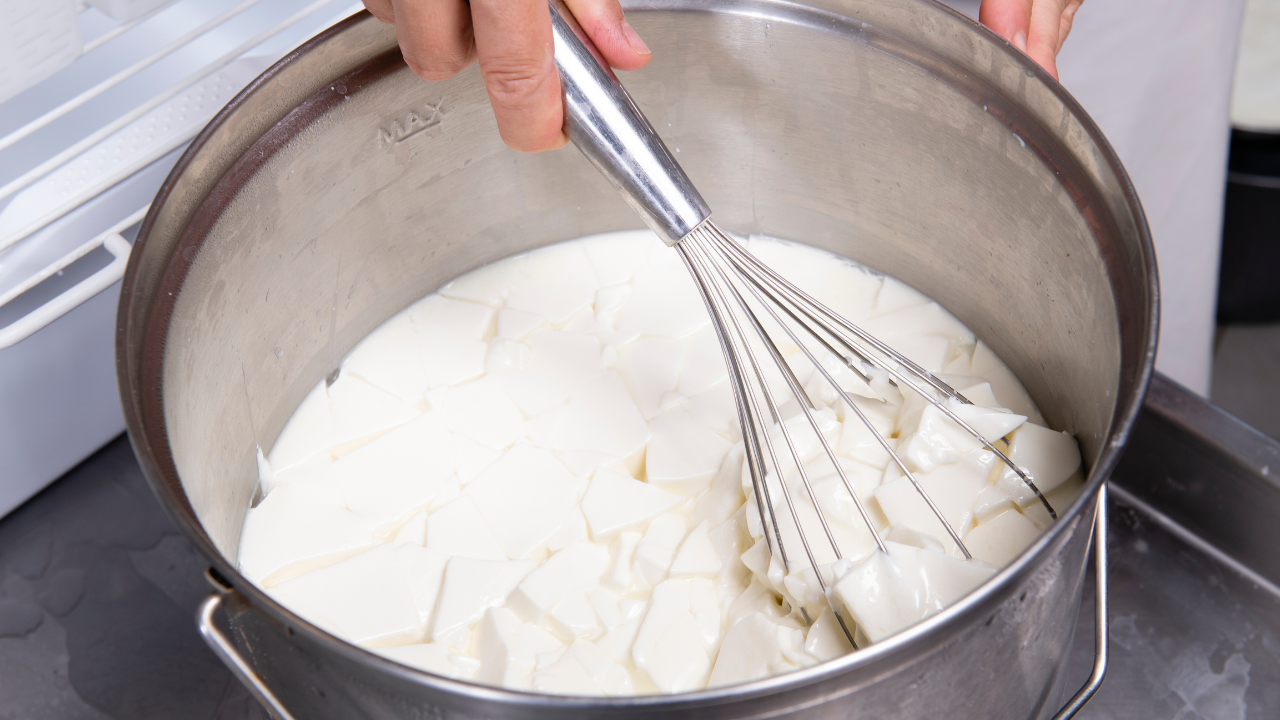
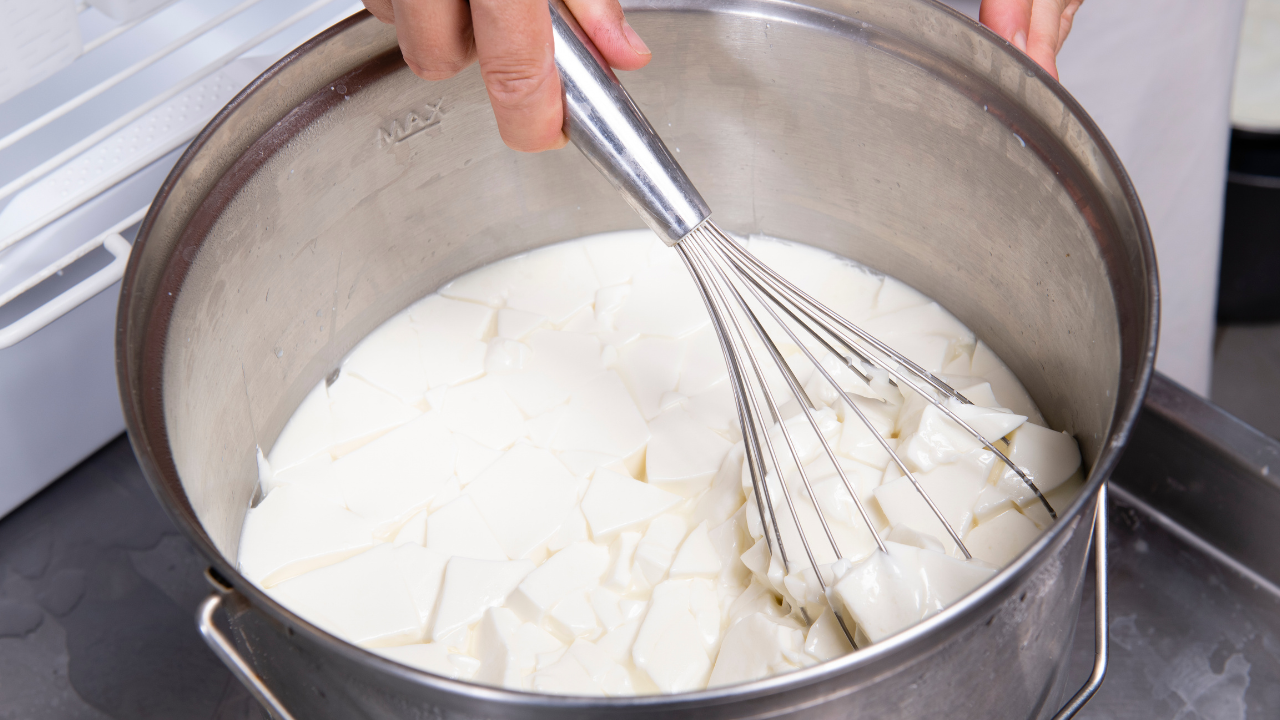
Milk is not a simple liquid. It is a delicate mix of water, fat, proteins, sugars, minerals and tiny suspended particles. The two main protein groups in milk are casein and whey proteins. Under normal conditions, these proteins stay comfortably dispersed, which is why milk looks smooth and uniform.
But milk is also sensitive. Heat, acidity and rough handling can upset that balance. When milk is boiled too aggressively or exposed to an acidic ingredient, the proteins lose their natural structure and begin to clump together. That clumping is what we call curdling.
Heat plays a major role here. As milk warms up, the proteins become more unstable. If the temperature rises too quickly or stays too high for too long, the proteins start separating. In plain terms, the milk’s smooth texture breaks down. The fat and water no longer stay perfectly mixed, and the visible result is curdling.
Acidity can speed this up even more. If a pan is not clean, if a recipe includes lemon, tomatoes or vinegar, or if the milk has already begun to sour, the pH drops. Once that happens, the protein structure weakens faster, and curdling becomes much more likely.
Sometimes, even older milk can curdle sooner because it is already slightly acidic before it reaches the stove. That is why milk that looks fine in the fridge may still behave badly once heated.

 Total Users : 10192770
 Views Today : 2007