


[ad_1]
Abinash Bikram Shah calls India his “second home”. He recalls growing up hearing Mani Ratnam’s film songs (Roja and Bombay) on Nepal’s street corners. Bollywood films reached him via VCRs and Doordarshan. “My friends call me pretentious when I say I love Mahesh Bhatt’s Arth and Dimple Kapadia’s Rudaali. In 2000, I came to know about Satyajit Ray, and my perspective was changed,” says Shah, who speaks of deep friendships across the border. Albeit some of them have been “jokingly racist [towards him] for fun,” he says with a smile. For generations, Nepalese have seen India as a destination: economic or spiritual, as evinced by two characters in Shah’s debut feature Elephants in the Fog. One wants to flee to Delhi to start a new life with her lover, and the other wants to spend her final days in Varanasi.
What began as a TikTok binge watch during the pandemic led Shah to Nepal’s trans community and eventually to Cannes. “I’m looking forward to seeing how the audience will take this film, and of a man who truthfully made a movie about transwomen,” says Shah, whose short film Lori (Melancholy of my Mother’s Lullabies) in 2022 won the Cannes Short Film Palme d’Or Special Jury Mention. If in 2022, Saim Sadiq created history with Joyland as the first Pakistani film to be selected (and win two awards) in Un Certain Regard, this year, Shah creates history with Elephants in the Fog (Tinihāru). It is the first-ever Nepalese feature to enter Cannes (Un Certain Regard), and premieres on May 20. The common link is the foregrounding of transwomen and their right to love and dignity. If the former presents an individual as a social equal, the latter zooms in on the community’s layered, complex and dichotomous reality.

Produced by five countries (and 10 producers!), Elephants in the Fog shows the mother figure as the cultural and moral anchor of this “chosen family.” The mother-daughter dynamics are a recurring trope in Shah’s films. This time, he juxtaposes the imagery of the matriarchal Kinnar/Hijra (trans) community with that of elephants, which are tight-knit, female-led clans, guided by a matriarch. This community lives along the Chitwan National Park, near the India-Nepal border. When Pirati (Pushpa Thing Lama), the next-in-line matriarch leader, is torn between personal desire and communal responsibility, her daughter Apsara goes missing. Edited in Germany by veteran Andrew Bird and Paris J. Ludwig, who’s a transwoman, the social drama spirals into a psychological thriller.
Edited excerpts from an interview:
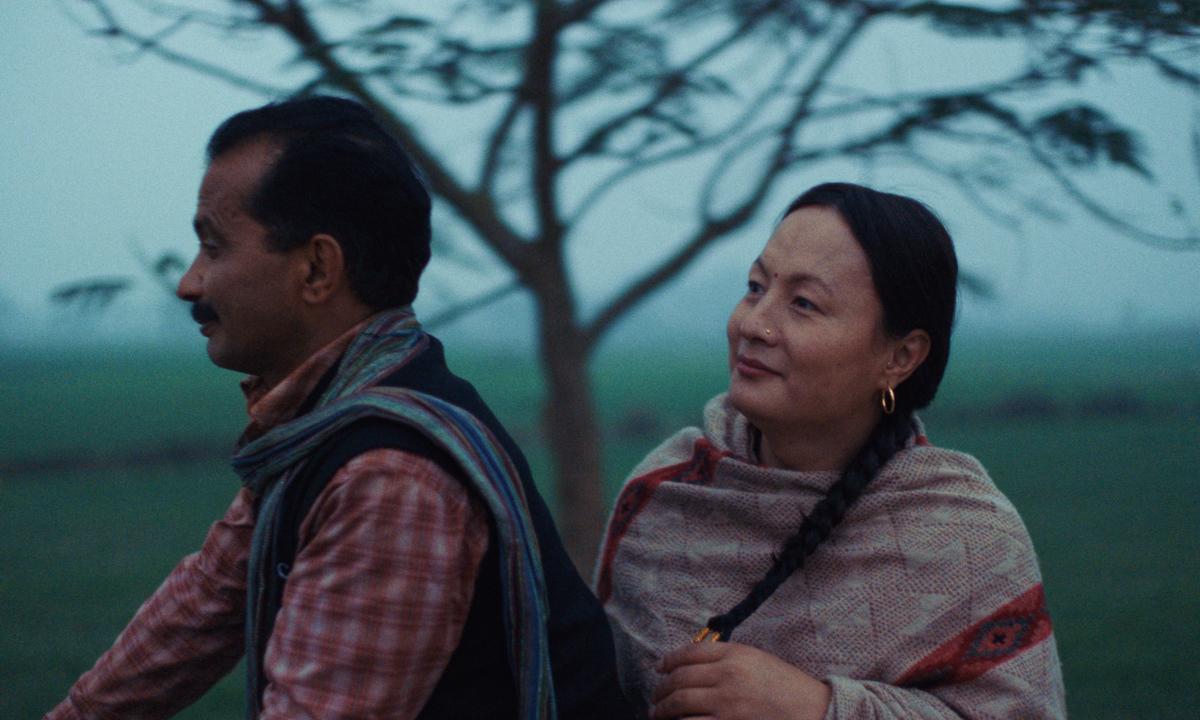
A still from the film.
| Photo Credit:
Special arrangement
Question: Before being a director, you are a screenwriter. You’ve written for Deepak Rauniyar (Highway, 2012) and Min Bahadur Bham (Shambhala, 2025). What do you enjoy more: writing for others or for yourself?
Answer: With other people, I tend to let go of the script at some point. For me, cinema is a director’s medium. When I’m writing for myself, it’s more visual; I know what I want to do. Highway was my first feature screenplay. Deepak shared a basic story idea, and I wrote with that thread. Min and I wrote together. Shambhala’s story was completely Min’s. I wrote the first draft, fixed the structure and brought in characters’ depth.

Q. Has Nepalese mainstream evolved from Bollywood rehash? Which Nepalese indie filmmakers paved the path for filmmakers like you to emerge?
A. Nabin Subba and Tsering Rhitar Sherpa’s films have this Nepali authenticity. They inspired us and took Nepali cinema to global festivals. Subba’s film A Road to a Village (2023) was screened at the Toronto International Film Festival. They gave us the courage to tell that there will be people ready to hear our stories, listen to our voices, and that our films really matter. My contemporaries are Deepak, Min, Pooja (Gurung) and Bibhushan (Basnet).
[Mainstream Nepali cinema] has evolved. Nischal Basnet’s film Loot (2012) had a bit of heightened drama but was fresh because he chose the actors from the theatre, very raw-looking, and there were no song-and-dance. After that film, people started going in that direction; still, it’s not realistic.
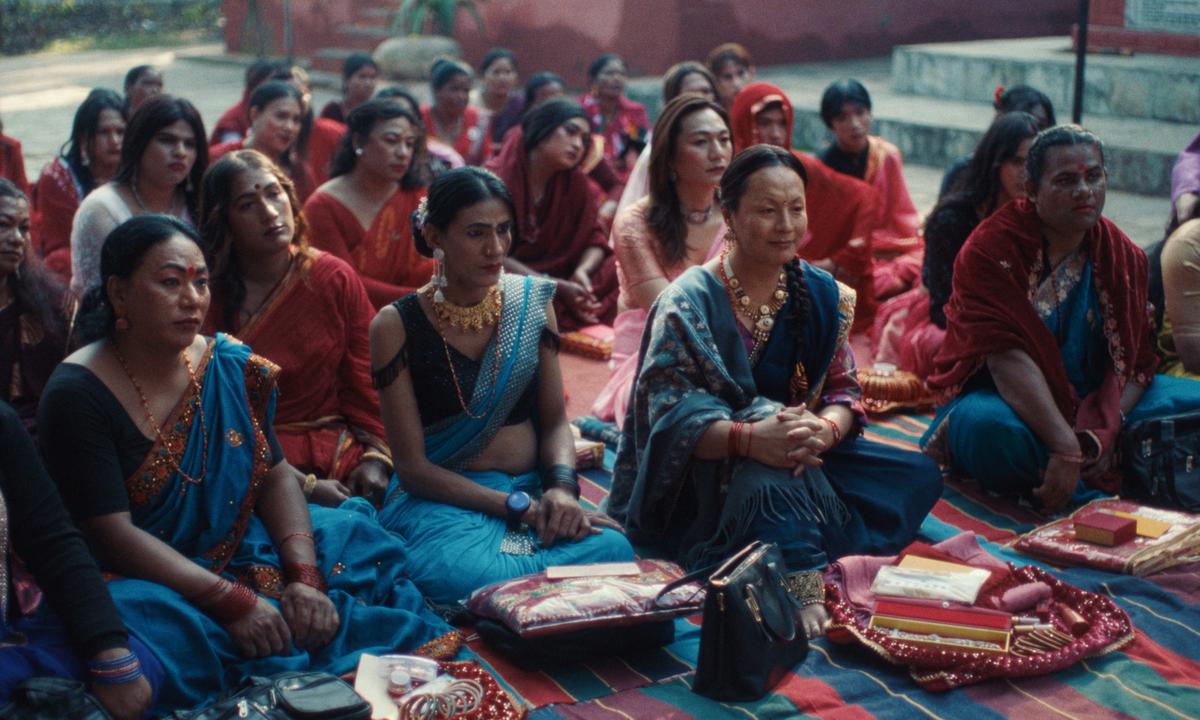
A still from the film.
| Photo Credit:
Special arrangement
Q.How was your film born and the idea of showing human-animal co-existence and marginalisation, both as forces of nature?
A. To avoid news during the lockdown, in 2020, I was scrolling reels a lot on my phone and watching films. On TikTok, I came across a fun video of a group of Kinnars living as a family, with their own rituals and language, all of which fascinated me. But the comments were so bad. Earlier, I’d only seen transwomen either from the Blue Diamond Society (rights group) or those into sex work. And that too only in Kathmandu. But the ones I saw in the video were from the southern part of Nepal, near the Indian border. The Kinnars are invited into homes to give their blessings, but aren’t welcome for long. That contradiction fascinated me. In my films, I’m always drawn towards this concept of family, and to the persons who are pushed to the edge.

Q. At what point did the forest and elephants (the ecological conservation metaphor) enter the script?
A. It is because these Kinnars were living in that part of the country, close to the Chitwan National Park, near the India-Nepal border. One of the trans mothers asked me whether I’d heard this story about the elephant and the blind man, and then explained: since the blind man doesn’t know what the elephant looks like as a whole, he touches its leg and thinks it’s a pillar; he touches its tail, and thinks it’s a rope. Then she said the most profound thing: ‘The society doesn’t know us as a whole, either they think we are these people with magical power to bless, or we are sex workers. They don’t consider us as a whole human being.’ That made me explore the elephant part. We also have this Elephant God (Ganesha). When someone disturbs the status quo, elephants come into the villages, destroying crops and houses. It’s about that contradiction.
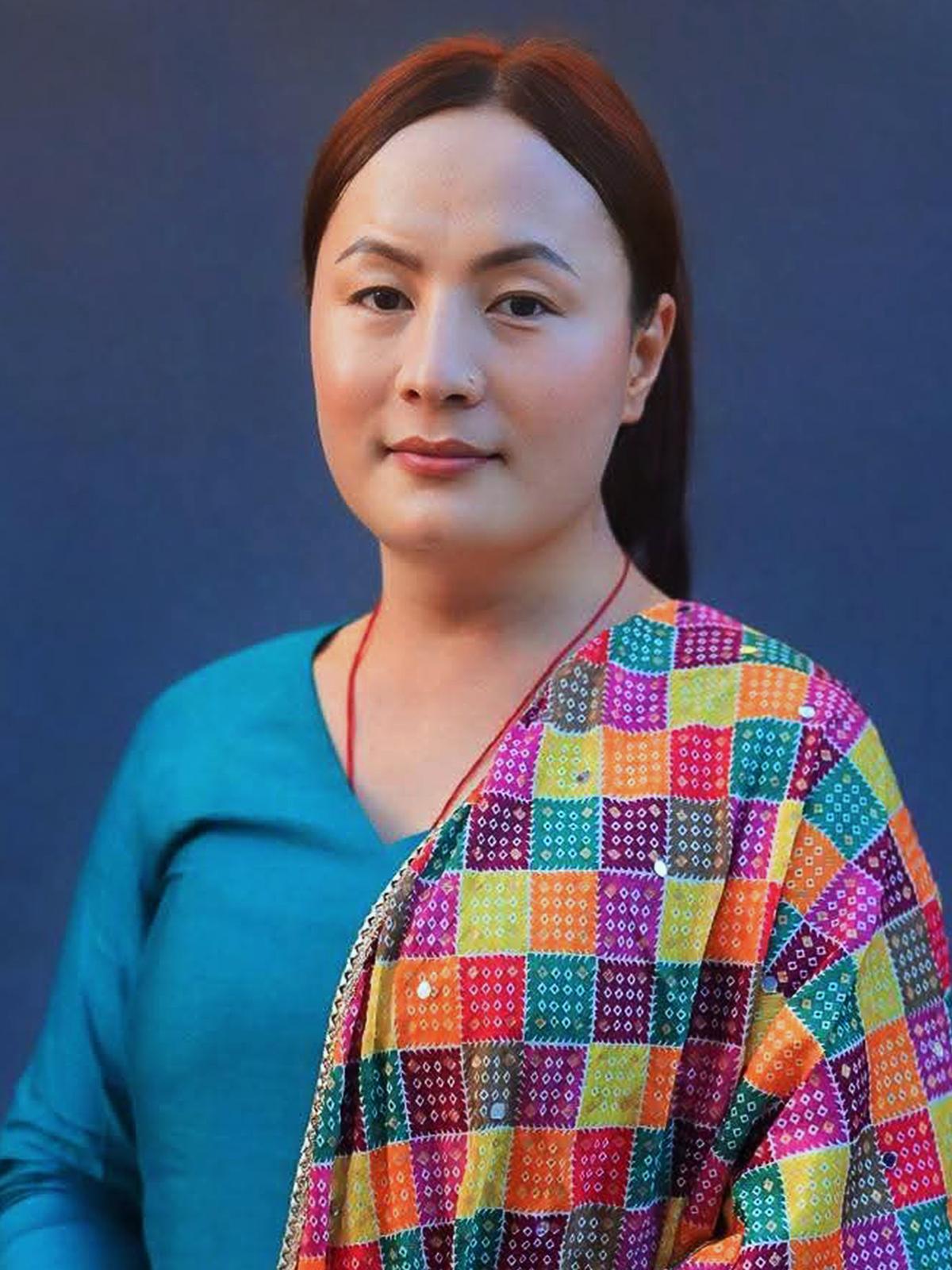
Pushpa Thing Lama essays the role of the protagonist Pirati in Nepalese film ‘Elephants in the Fog’.
| Photo Credit:
Special arrangement
Q. The close-ups, blue-grey, foggy dark frames are spectacular. What was your brief to the cinematographer?
A. We chose the stills from [American photographer] Nan Goldin’s photographs [documenting LGBTQ+ communities], which are so raw, intimate, and real, and worked in that direction. My cinematographer Noé Bach is French; he has done several other films and has four films at Cannes this year [A Woman’s Life; Wild Diamond; Little Girl Blue]. What struck him the most was the magical power of the [transwomen] community.
We also have a production designer from India, Mausam Aggarwal [Shadowbox; Nasir]. I really loved her film, (Ajitpal Singh’s) Fire in the Mountains (2021). We three together designed the film’s mood and scenes’ looks.
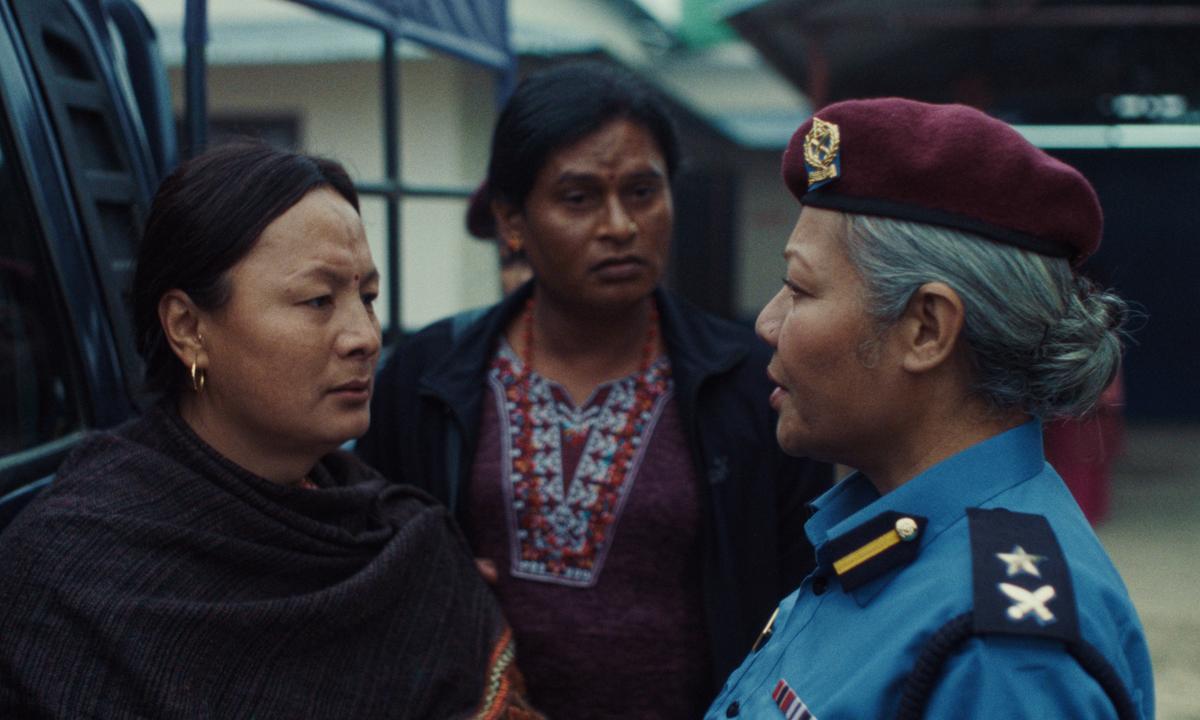
A still from the film.
| Photo Credit:
Special arrangement

Q. Talk about the outsider gaze of you as a non-trans person telling the story of the Kinnars and of mothers and daughters.
A. My short film, Lori, was also about a mother-daughter relationship. That is because I’m living with and caring for my ageing single mother. It’s such a valid point that being a man, you cannot tell the story of the Other: of a woman/mother, and of the trans community, but I believe we must go where our empathy leads us, otherwise if we create these rigid boundaries where man can only tell the man’s story, we are again reinforcing the same wall that my film is suppressing. The Nepalese title of my film is Tinihāru, which means ‘them’. My goal is to move from ‘them’ to ‘us.’I went to their community without a script. Just for research, to look for stories. It’s been a very long process (two years) to tell this story, and for me, the authenticity is the most important thing. I don’t want to be from the outside, hearing them, nor to come from a position of authority, but from one of authenticity. And the authenticity comes when you spend time with them, understand them from their perspective, and then the final story emerges. Some of the actors, including the lead Pirati, are from the same community. That also makes this story feel authentic to me, and less like me looking from the outside. Pirati/Pushpa lives far away, 200 km from Kathmandu. I had to go to her place. When I took her for this scene exercise, she was ‘acting’, like in Bollywood or Nepali films. I had to make her believe that it’s her story, not someone else’s.
Q. India recently rolled back transgender persons’ right to self-identify. In comparison, in the South Asian region today, Nepal is the most progressive on LGBTQ+ rights. It celebrated the region’s first legal trans marriage, it has a trans politician. Your film, however, shows the ground reality is different.
A. It’s all about the social contradiction towards them. Nepal is progressive, for sure, and trans persons are coming out, and it’s very good that’s happening in our country. There are political and other support and provisions provided to transgender people. The Blue Diamond Society has been working for LGBT+ rights for 25-30 years. Because of them, the trans people aren’t afraid of coming out. One of the new MPs (member of Parliament Bhumika Shrestha) is a transwoman. It’s progressive, but (social) mindset isn’t quite so because we are a conservative society. Nepal and India are very similar.
[ad_2]
Source link

 Total Users : 10216428
 Views Today : 4023