


It is late evening at a special set put up in Hyderabad for the promotions of Dacoit, releasing on April 10 in Telugu and Hindi. If lead actor Adivi Sesh, who has also co-written the film, is overwhelmed with the frenetic activity, he tries not to show it. He is courteous to those who drop by to meet him, obliges a fan who has flown in from Japan for an interaction, and when he settles down to talk, discusses his craft and emphasises, “I am not playing the game for vanity; this is my art and this is all I know.”
He last portrayed a full-fledged character in HIT 2, in late 2022. He says with a chuckle, “But you saw me in HIT 3, even though it was a cameo.” In the last three-and-a-half years, he has acted in and co-written Dacoit with his best friend Shaneil Deo, the cinematographer who debuts as a director. Sesh has also co-written Goodachari 2 or G2 with its director Vinay Kumar Sirigineedi; the film is still underway.

“I haven’t stopped working,” says Sesh. “If you look at how long it generally takes me to write and act in a film, Dacoit and G2 have not been too different.” He cites an example with one of his previous films, Major, the Major Sandeep Unnikrishnan biopic. “People think the film was delayed due to the pandemic. But those breaks helped us think about what we wanted to convey cinematically about a man who led a large, impactful life.”
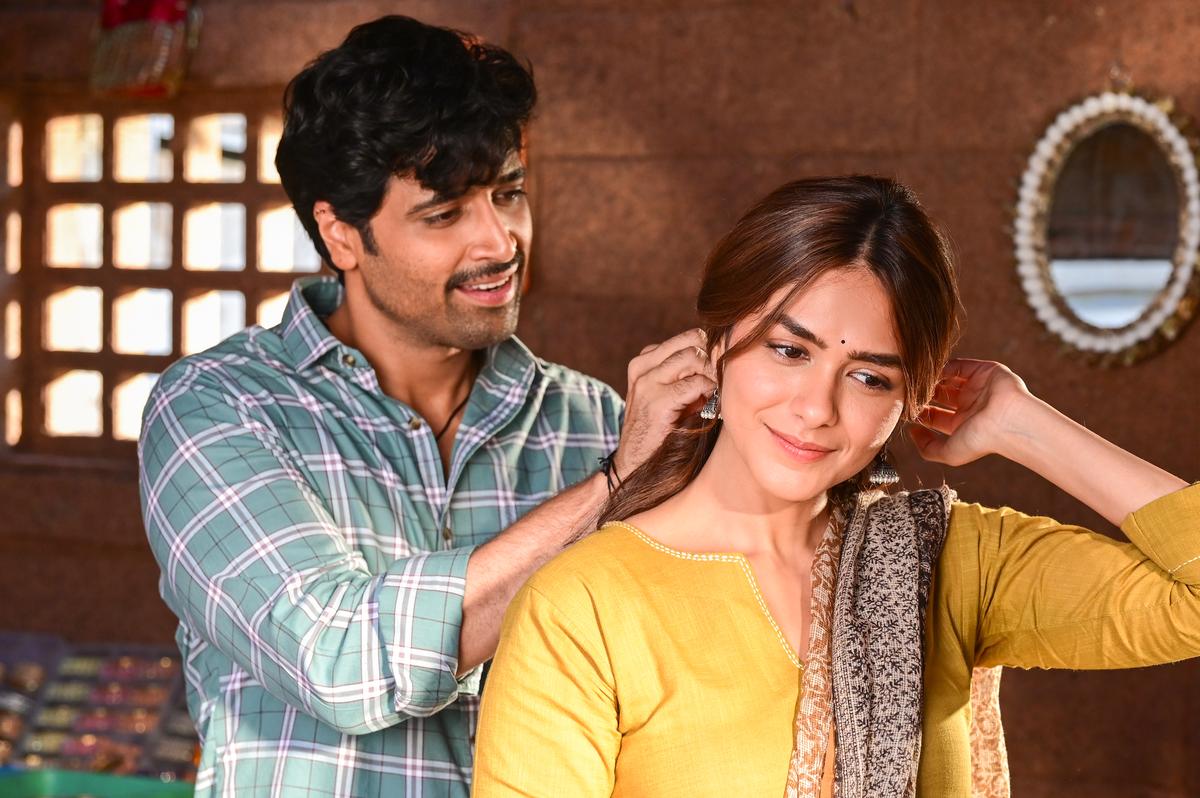
Adivi Sesh and Mrunal Thakur in ‘Dacoit’
| Photo Credit:
Special Arrangement
Dacoit, filmed simultaneously in Hindi and Telugu, took time to unfold. The idea emerged when he and Shaneil, who have known each other since their days in San Francisco, wanted to narrate a love story with an Indian ethos and a Western style. “Imagine a soulful love story amid railway tracks, guns, bullets, heat and dust. The only difference is Mrunal (Thakur), Anurag sir (Anurag Kashyap) and I are not wearing cowboy hats. We are narrating a true-blue Indian love story with the admiration we have for Clint Eastwood films such as A Fistful of Dollars or The Magnificent Seven.”
The story unfolds in Madanapalle and nearby areas on the Andhra-Karnataka border, and traces the journey of two characters over 13 years. Sesh had to look rugged and his costume designer and stylist Rekha Boggarapu shares how they tried several looks to make him look less urban. “We finalised a tanned look, just enough to appear weathered if someone of my complexion were to spend time in prison. My skin appears dry and crinkled but strangely I’ve been getting feedback that women like how I look in this film.”
The geography does not change for the Hindi version, and involves Hindi-speaking characters in the region. “We kept the locations as realistic to the story as possible,” says Sesh and reflects, “I watched Padman, which was set in Bhopal. When I read the book, I learnt it is originally a story from Tamil Nadu. I wondered why a South Indian story could not be told in Hindi.”

The beating heart
If some of the films he co-wrote — Kshanam and Goodachari for instance — were appreciated for the unexpected turns in the story, Dacoit required him to venture into a newer territory of a love story. “Though Kshanam was a thriller, the love story was its beating heart. Goodachari and Major also had some elements of love stories. Dacoit is a love story told in the language of an action film,” Sesh explains.
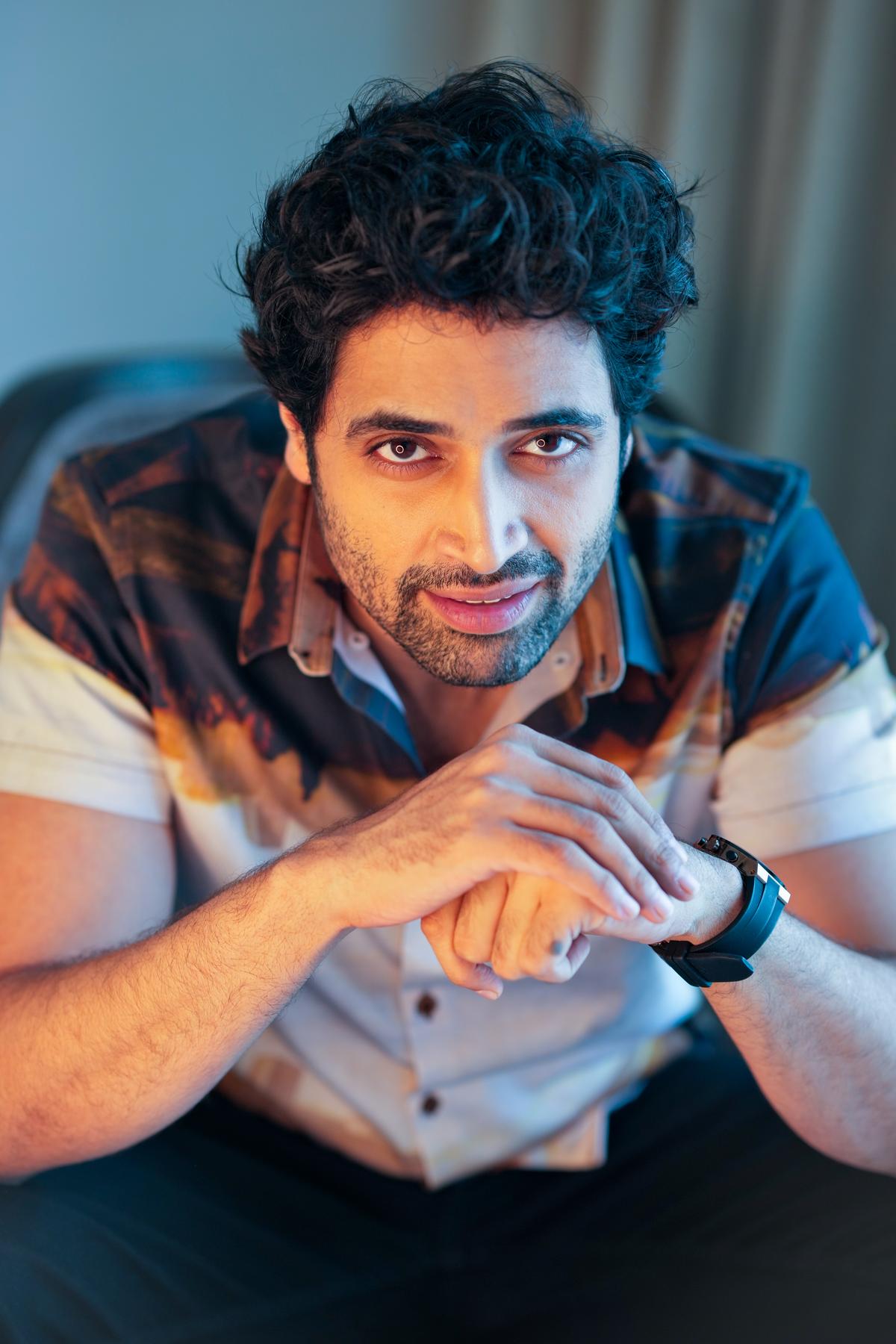
Adivi Sesh
| Photo Credit:
Special Arrangement
Dacoit is a more commercial outing than his earlier films that were viewed as being multiplex-friendly. “I have always been the guy who loves Bond movies, Rambo or Telugu hits like Athadu,” says Sesh.
In contrast to the slick spy thriller Goodachari or Major, Dacoit’s action choreography warranted a rustic aesthetic. The film had six action choreographers on board. Sesh says, “Here the action is less about how cool a punch or a kick looks and more about the raw passion and anger with which I beat up someone. The action exists to serve the emotional quotient.”
During a sequence, he suffered a tear in the posterior cruciate ligament that took a few months to heal. When he returned, he went all out to complete the film. “Had I listened to the doctors this film would not have been ready for another few months,” Sesh says with a laugh.
When the film was delayed, he was not bothered about missing from the large screen for a while. The rat race has never been his focus. “Because I am not a rat,” he jokes and adds, “My anxiety is about how good the film is and not about my positioning in cinema.”
Avoiding burnout
Sesh is among the few actors who multitasks, chipping in to support different departments. When work got hectic, he was cautious to avoid burnout. “I would enjoy the smaller moments — my mom waking me up and reminding me that I need to be back at work, spending time with my dogs, or listening to a beautiful song.”
Since Kshanam, the trust he built among the audience has continued to grow with each film. When he begins writing, he starts on a blank sheet but is conscious of the expectations. “We live in an era when trust gets broken easily. The world is full of false promises. I need to work passionately to keep earning that trust.”
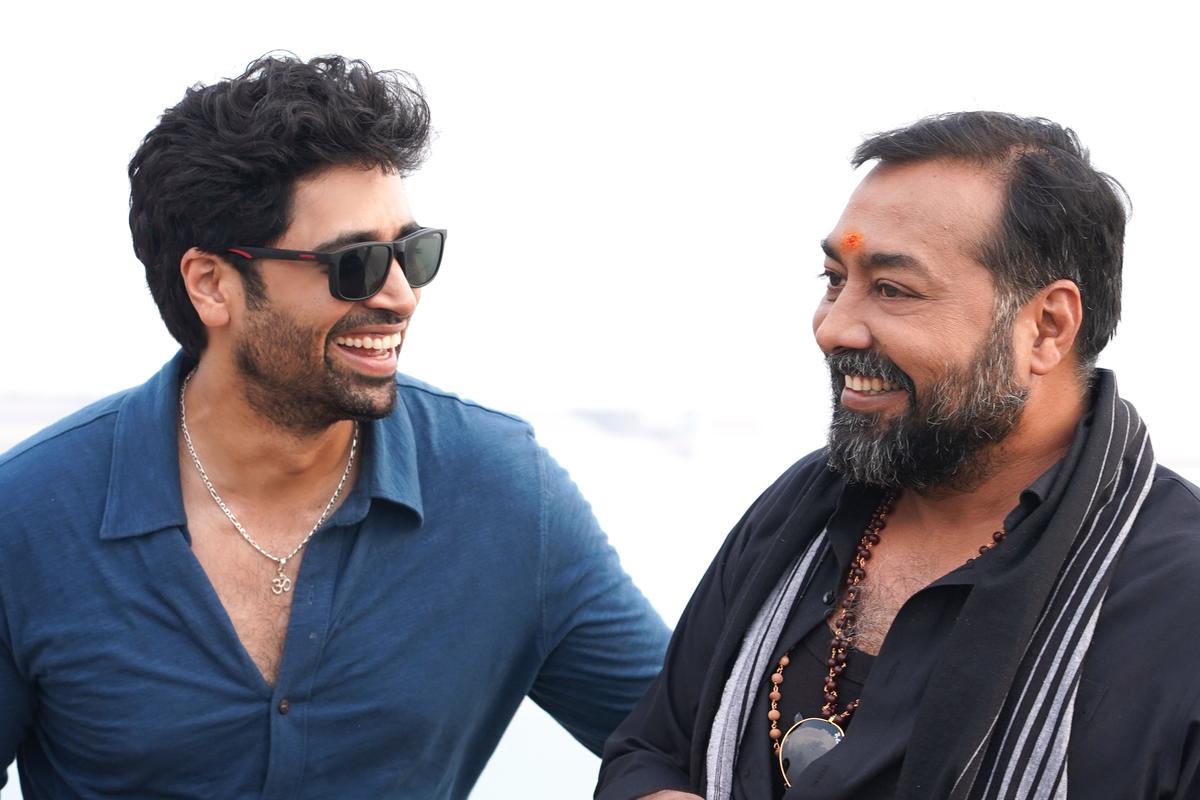
Adivi Sesh and Anurag Kashyap in the film
| Photo Credit:
Special Arrangement
He and Shaneil took feedback from producer Supriya Yarlagadda, Mrunal Thakur and the female assistant directors for their perspectives on the female lead character. Like Supriya, Sesh reiterates that Dacoit is a two-hero story. “Her (Mrunal’s character) perspective is pivotal.” Though Sesh loves to work with bound scripts, there is elbow room for actors to give new dimensions to their characters.
“For instance, Goodachari has this aspect of a boy who lost his father and is raised by a father-figure. When Prakash Raj sir came in, he enacted his part like a strict father, on the lines of Ronit Roy from Udaan. When we asked if he wanted to soften the stance, he said, ‘I am a RAW agent, why would I do that?’ We saw his point and this perspective changed the father-son dynamic.”
Sesh believes that his writing and performances have to keep adapting to cater to the rising standards of the audiences. He also observes how newcomers on set are often hooked to their phones. “They are speaking to you while they are looking at their phones. That influences their work and the art they create. I have had to tell them to put their phone away.”
He acknowledges that the mobile phone distraction has made writing tougher. “I heard that an OTT platform was planning to sanction shows based on second hand viewing — you should be able to follow a series even if you are scrolling on your phone,” he shrugs.
As someone who does not enjoy watching content on the small screens, Sesh says, “I believe that the theatre watching is still the purest form of entertainment.”
Published – April 03, 2026 07:00 am IST


 Total Users : 10081870
 Views Today : 726