


Werner Herzog’s new documentary, Ghost Elephants, which had its world premiere at the 82nd Venice International Film Festival, follows South African naturalist Steve Boyes on his quest for an undiscovered species of elephant in the Angolan highlands.
The documentary, which premiered on National Geographic on March 20, is beautifully shot, (the poaching sequences are distressing) and buttressed by Herzog’s distinctive narrative style, tells the tale of these giant, yet elusive creatures.

Boyes has a two-fold plan of action; to capture the mysterious pachyderms on film and to find a DNA link between the ghost elephants and the Fénykövi elephant, a massive specimen in the Smithsonian National Museum of Natural History in Washington DC.
Into the silent highlands
Speaking from New York during the theatrical premiere, Boyes traces the beginnings of his Ahab-like quest. “In 2015, we spent six months in armored vehicles trying to get through minefields to gain access to the source of the Okavango Delta.” They arrived in winter. “Coming out of the Highlands and going through the forests, everything was shut down.”
In an attempt to defeat the silence and stillness, Boyes would go for a run every afternoon when the party stopped on the river. “I would go to the highest ridge and whistle. Once I found footprints of people who had been honey hunting, and I pursued them. I was obsessed, I wanted to meet someone,” Boyes says with a laugh.
The bull’s hidden garden
On one of those runs, Boyes found elephant dung. “I found what I call an elephant garden, where an old bull elephant lives. He had broken all the trees around to make a clearing, and then broke the tops of trees so they would grow from the bottom, for young elephants to feed on. What he was doing was hoping that when the breeding herds came through, they would stop in his garden, so he could interact with them. He was just a lonely old bull elephant.”
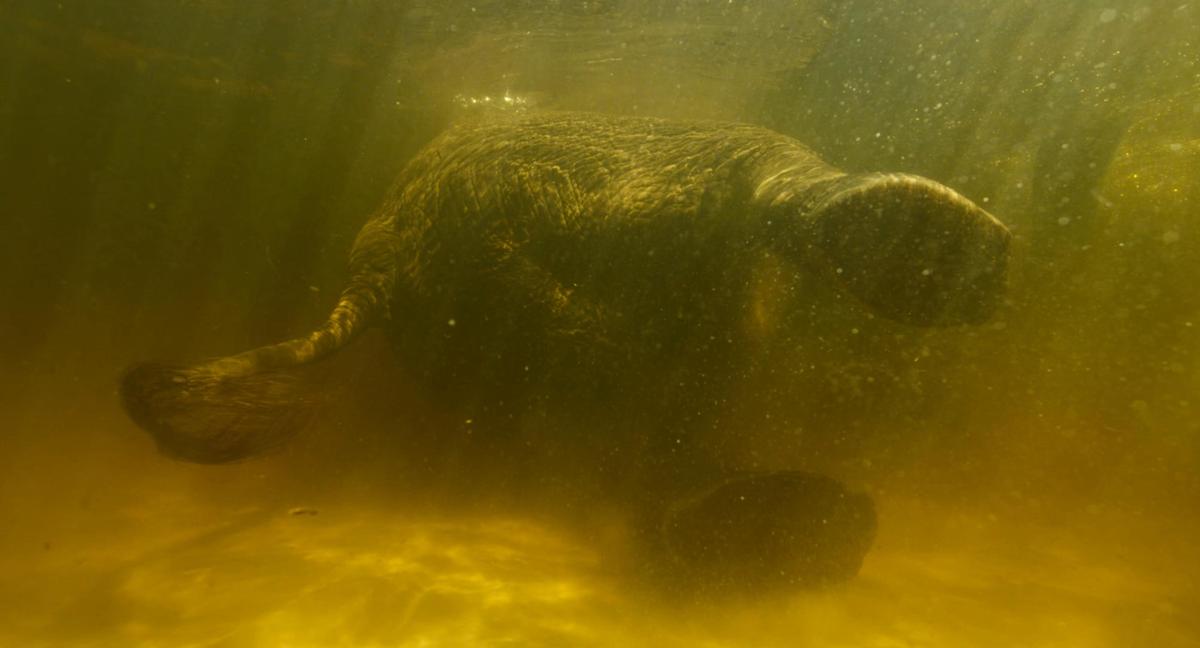
Underwater footage of an elephant as seen in ‘Ghost Elephants’
| Photo Credit:
Skellig Rock, Inc
The bull elephant, however, was not there. He was a ghost. And that started Boyes’ inquiry into the elephants.
“We started mountain biking and hiking and spending months looking for elephants. We found dung, and at one point, you could smell elephants. You just couldn’t hear or see anything.”
Searching for vanished giants
“We put 180 camera traps, motion sensing, heat sensing and acoustic sensors, listening for them. We found hundreds of new species: lizards, snakes and butterflies. We got pictures of lions, and cheetahs, and all-new populations of endangered species. But the biggest one, the one that is as big as a house, was not there,” he says, laughing ruefully.
Boyes had the KhoiSan master trackers with him for the first time. “We had been working together for three years to get to know each other. I knew I had the best people on Earth. The master trackers, Xui and Xui Dawid, have an interaction with an elephant footprint that is the same as you and I would have with a human face. I knew that within a few weeks, they would know the names and birthdays of every single elephant that walked there without seeing them.”
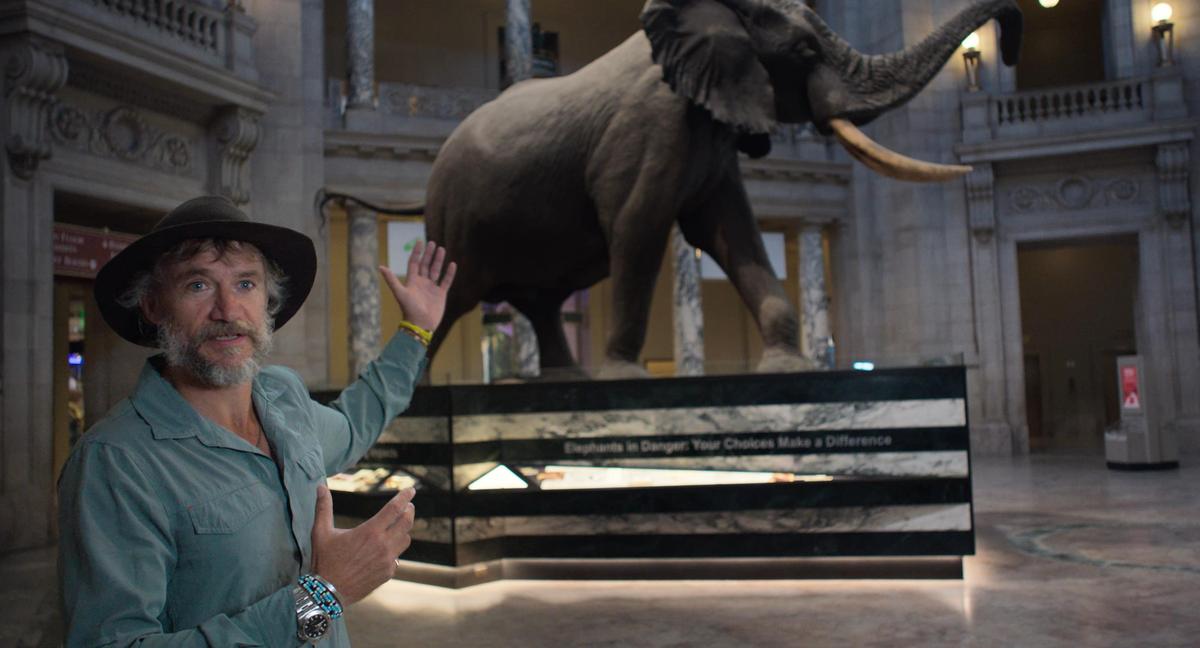
Dr. Steve Boyes stands in the rotunda of the Smithsonian Museum. He describes his emotions seeing Henry the elephant
| Photo Credit:
Skellig Rock, Inc
Though Boyes says he was not obsessed about seeing an elephant, he was concerned for Herzog. “He probably needs to have an elephant at the end of this film!”
Ghost elephants behave unlike any others — they are stealthy, nocturnal, and deeply wary of humans, which could be a behavioural adaptation to Angola’s history of conflict. “There are living ghost elephants that witnessed the atrocities of the war. Angola lost between 50,000 and 100,000 elephants over those years.”

The elephants, Boyes says, have always been hidden. “They are tied to the Kangala people who have been their protectors and partners. In mythology, these elephants have always been incredibly secretive. They are believed to be human and connected to the ancestors.”
In the film, the king speaks through the ancestors to the elephants to ask them if they will reveal themselves. “That is what you have to do to see and photograph them. It is part of their mythology.”
Boyes describes the high‑altitude forest where the ghost elephants live as a temple up in the sky. “It is a profound landscape. There is the feeling of resilience, recovery, forgiveness and fellowship. All the wildlife there is unique to that place. It is an ocean of forest and you are a tiny speck inside there. There are not many places in Africa, and I’ve been everywhere in Africa, where you can feel that deep connection to nature.”
Wisdom of master trackers
Working with master trackers taught Boyes the difference between ancestral methods and scientific tracking. “I’m a scientist, and scientists read data inputs to create a narrative around what we think is reality. Through master trackers, the most intricate and advanced scientific minds alive today, you experience the birthplace of science.”
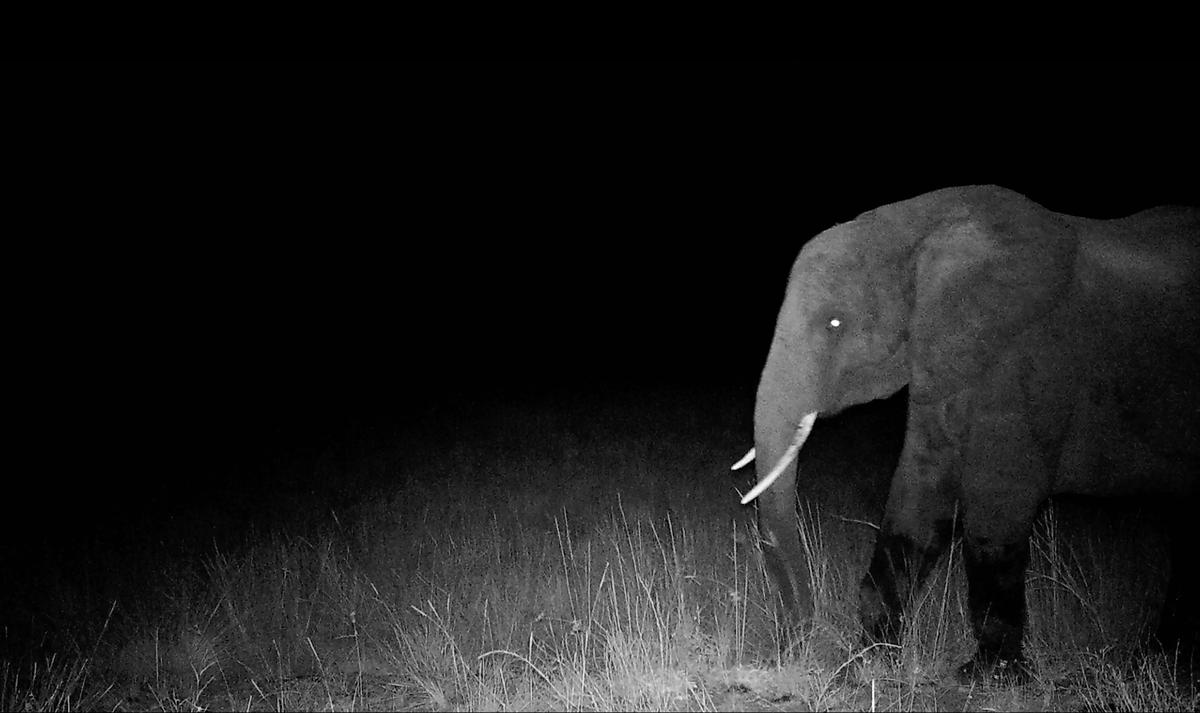
The first photo of a ghost elephant captured by a motion controlled camera. The eyes glow in this night shot
| Photo Credit:
The Wilderness Project Archive
Boyes says he looked at tracks, hoping it was going to help him find or understand the elephant. “The master trackers hardly looked at the tracks. For them, it is about every input — from smell to scratches on the bark and the sound of other birds and animals.”
Their ability to construct a narrative from vast visual and auditory data inputs far surpasses anyone he has ever met in science, Boyes says. “We are restricted and narrow in the way in which we measure and see things. The master trackers, on the other hand, are open and suck in all the data to put out a narrative that is always true.”
Herzog, who called the project “a hunt for Moby Dick,” brings an intensity to the project, Boyes says. “The first thing he asked each of us was, ‘What would a world without elephants be like?’ For my first interview, which is not part of the film, he asked ‘What do you dream of?’ His openness to think differently about what our motivations are and what we are doing started a mode of thinking. We went to bed with these questions and woke up as different people.”

The second interview Boyes did with Herzog, which is included in the film, was a tense three hours of his life, Boyes says. “When I’m talking about the temple, I’m quite hyped up. It is because of the interaction with Werner. He goes very deep into what exactly I feel and think.”
By the end of Ghost Elephants, Boyes manages to capture the elusive giant on a phone (all the high-tech equipment was of no use). Boyes sees it as an ongoing project. “In January, the Ramsar Convention on Wetlands listed the Lisima Lya Mwono Wetlands as the world’s fifth largest, globally important wetland system. The Angolan government is excited about that.”
A new conservation vision
Community-based systems of protection are the way forward, Boyes says. “We’re going to use traditional leaders, and indigenous knowledge systems as the primary mechanisms for protection. Angola used to be called the living room of Africa, because it has so much wildlife and wilderness and that is still there. It just needs to be protected. We need to move on from those traumatic years of the war. This will never be finished in my lifetime, but we have started a process that is incredibly positive for Angola, for those elephants, for all of the wildlife and the people there.”
Ghost Elephants is currently streaming on Jio Hotstar


 Total Users : 10076956
 Views Today : 1759