

[ad_1]
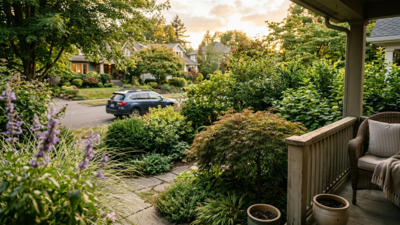
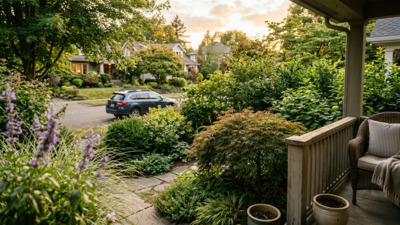
There is a mistaken belief that for a front yard to be private, one must erect either a high fence of wood or an impregnable wall made of bricks. However, while fences do give privacy, they may actually intimidate visitors and sometimes even reduce the aesthetic value of the property. It is important to remember that most people do not want to be hidden by such a wall but rather seek to be “buffered.”The best approach that will enable this is the creation of layers within the planting process. Compared to creating only one hedge layer, layering involves varying the height, texture, and depth of the hedges planted. By creating such an effect of visual filtering, it softens the impact that would be caused by the direct view of the street from the windows of your house. Your garden will block the streets from you rather than you from it.This is important since many front-yard borders have been planted, but do not appear thick when viewed from the road. This will solve that problem instantly since both height and depth work wonders in creating a thick strip of border in no time.Creating the structure with small trees and shrubsThe first element used in creating a privacy garden is that of the “anchors.” This is the vertical structure that will offer the screening at the point where you need it the most. Normally, this includes the areas where there are large windows or outdoor seating places. However, it is essential to note that a good front-yard garden should not include tall-growing trees that eventually overshadow the house.In the study, Experts’ pick of small evergreen trees by the Royal Horticultural Society (RHS), designers emphasise using trees that offer year-round interest without overwhelming a small lot. A compact evergreen serves as a perfect structural anchor.To build on this, a research piece titled Plants for Mixed Privacy Screens by the University of Maryland Extension suggests moving away from a single-species hedge. Instead, the study recommends a “mixed” screen, which is more resilient to pests and provides a much softer, more natural look for a residential street.
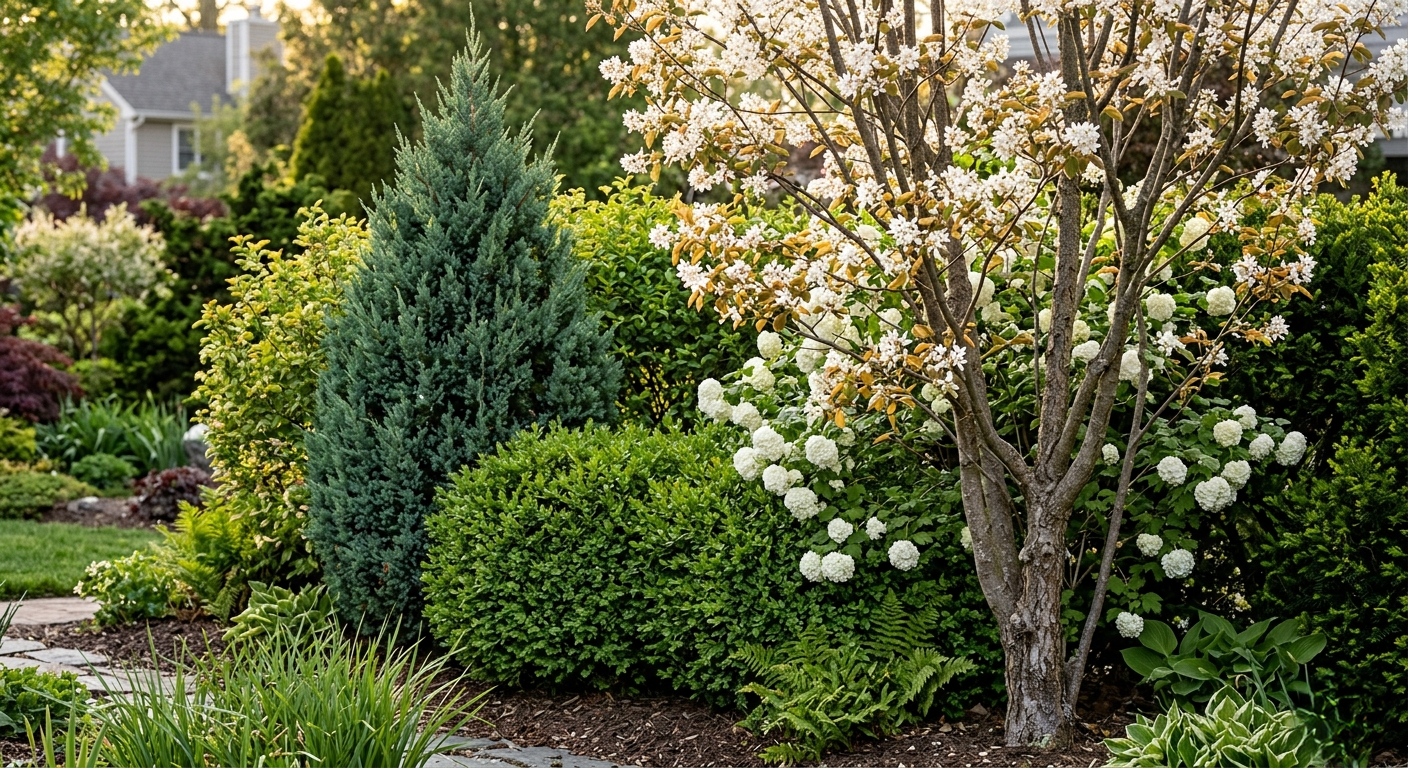
Ornamental grasses and perennials add softness. Repeating plant types unifies the design. This approach offers seclusion without fences, enhancing property aesthetics. Image Credits: Google Gemini
With your anchors established, you can start planting the mid-level layer of vegetation. This involves using medium-sized shrubs to “sew” the trees together. Rather than choosing one variety of shrub, consider planting shrubs of different heights. Using both flowering and evergreen shrubs will allow you to ensure that your privacy screen stays intact even after the flowers have finished blooming. The mid-level is the critical layer for protecting against the “mid-level” view, such as from car windows or pedestrians.Creating a soft transition with ornamental grasses and perennialsThe next few layers involve transforming a privacy screen into a garden. To achieve a softer effect at the front of your house, you will want to introduce plants like grasses and perennials to create a transition from your tall anchors down to street level. Grasses are an excellent choice due to their ability to move in the wind and give your screen a “living” effect. The fine quality of grasses adds to the contrast against the more rigid evergreens and prevents an unbalanced look on your property.Repetition is the key to making this layered look feel intentional. If you have a beautiful drift of purple salvia or a particular type of ornamental grass near your porch, repeat those same plants closer to the street edge. This “echoing” of colours and textures creates a sense of unity. It tells the viewer that the garden was designed as a single, cohesive space, which makes the screening feel like a natural part of the beauty rather than a desperate attempt to hide.Lastly, be aware of the importance of the “maintenance alley.” When designing a garden for privacy, it is easy to want to put everything tight up against the curb. However, keeping even an inch between the curb and the plantings adds another layer to your yard and makes it appear “thoughtful.” An organised mulched area or a well-defined strip of low plants like sedum makes the yard appear “composed,” providing a border to frame your more naturalistic privacy garden. The combination of the strength of plants such as dense evergreens with the softer feel of perennials gives you a front garden that feels secluded without ever building a fence.
[ad_2]
Source link

 Total Users : 10282497
 Views Today : 1809