

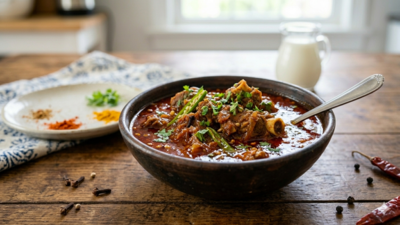
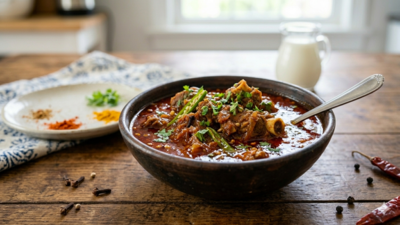
Kohlapuri mutton is a rich and flavour-packed Maharashtrian curry known for its bold spices, smoky aroma, and slow-cooked tenderness. This traditional dish combines succulent pieces of mutton with a deeply roasted masala made from coconut, whole spices, and dried chillies, creating a gravy that feels both comforting and intensely satisfying. The beauty of this recipe lies in the way every spice blends gradually into the meat during cooking, giving the curry its signature warmth and depth. Best enjoyed with bhakri, chapati, or steamed rice, Kohlapuri mutton brings the essence of authentic regional cooking straight to the dining table
How to make authentic Kohlapuri mutton: Key ingredients required
Kohlapuri mutton is celebrated for its robust flavour and fiery character. Unlike simple mutton gravies, this dish uses a specially roasted spice blend that gives the curry a smoky and layered taste. Dry coconut, sesame seeds, whole spices, and red chillies are carefully roasted to enhance their natural aroma before being ground into a rich masala paste. The slow cooking process allows the meat to absorb these flavours beautifully, resulting in a curry that is both spicy and deeply comforting. Its traditional preparation and rustic taste make it a popular choice for festive meals and family gatherings across Maharashtra.
Ingredients for Kohlapuri mutton
- 750 g mutton, cleaned and cut into medium-sized pieces
- 3 onions, thinly sliced
- 2 tomatoes, finely chopped
- 2 tbsp ginger-garlic paste
- 3 tbsp oil
- Salt, as needed
- Fresh coriander leaves, for garnishing
For the marination
- ½ cup curd
- ½ tsp
turmeric powder - 1 tsp red chilli powder
- Salt, as needed
- For the homemade Kohlapuri masala
- 2 tbsp dry grated coconut
- 1 tbsp sesame seeds
- 1 tsp poppy seeds
- 1 tsp cumin seeds
- 1 tsp coriander seeds
- 4–5 dried red chillies
- 4 cloves
- 2 green cardamoms
- 1 small cinnamon stick
- 6–8 black peppercorns
- 1 star anise
- 2 bay leaves
Optional for extra spice
- 1 tsp Kolhapuri chilli powder or any hot red chilli powder of your choice
Step-by-step method to make an authentic Kohlapuri mutton
Step 1: Marinate the meatPlace the cleaned mutton in a large bowl. Add curd, turmeric powder, red chilli powder, and salt. Coat the meat thoroughly and leave it covered for at least one hour so the flavours settle into the mutton properly.Step 2: Make the spice pasteHeat a pan on low flame and roast the grated coconut until lightly golden. Add sesame seeds, poppy seeds, cumin, coriander seeds, dried chillies, cloves, cardamoms, cinnamon, peppercorns, star anise, and bay leaves. Roast gently until fragrant. Allow the mixture to cool before grinding it into a smooth paste with a little water.Step 3: Prepare the base masalaHeat oil in a deep pan or pressure cooker. Add the sliced onions and cook until golden brown. Stir in the ginger-garlic paste and sauté briefly. Add the chopped tomatoes and cook until soft and well combined with the onions.Step 4: Add the muttonTransfer the marinated mutton into the pan and cook for a few minutes over medium heat. Mix well so the meat gets coated evenly with the onion and tomato mixture. Add the prepared Kohlapuri masala paste and stir thoroughly.Step 5: Slow cook the curryPour in warm water according to the consistency you prefer. Add salt if needed and cover the pan. Cook slowly until the mutton turns tender and absorbs the spices completely. If using a pressure cooker, cook for around 5 to 6 whistles before simmering for a few extra minutes. The gravy should become thick, rich, and intensely aromatic.Step 6: Garnish and serveFinish the curry with freshly chopped coriander leaves. Serve hot with bhakri, chapati, naan, or steamed rice.
Secret tips to follow while making Kohlapuri mutton
- Marinating the mutton properly helps soften the meat and improves the flavour.
- Slow cooking gives the curry a deeper and richer taste.
- Roast the spices carefully on a low flame to avoid bitterness.
- Fresh coconut and whole spices always provide a more authentic flavour.
- Reduce the number of chillies if you prefer a milder curry.
- Using warm water while cooking helps maintain the texture of the gravy.
- Allow the curry to rest briefly before serving so the flavours settle properly.

 Total Users : 10192583
 Views Today : 959