

[ad_1]
The 7th‑century Sanskrit play Bhagavadajjukam (bhagavat: hermit; ajjuka: courtesan) — is among the oldest surviving works in Sanskrit theatre. Celebrated as a classic instance of prahasana or farce, it brims with witty exchanges on dharma and the absurdity of transmigration, as the yogi and courtesan’s souls swap bodies — leaving other characters bewildered by chaos they cannot grasp.
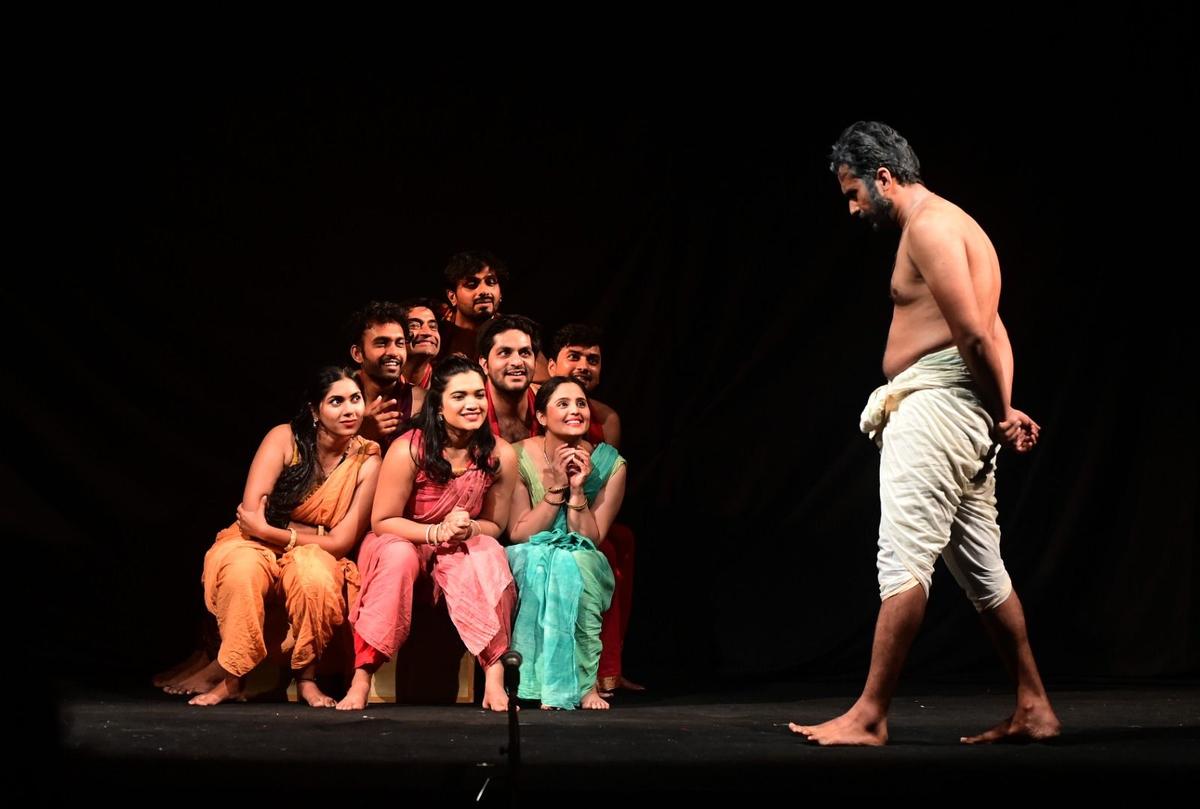
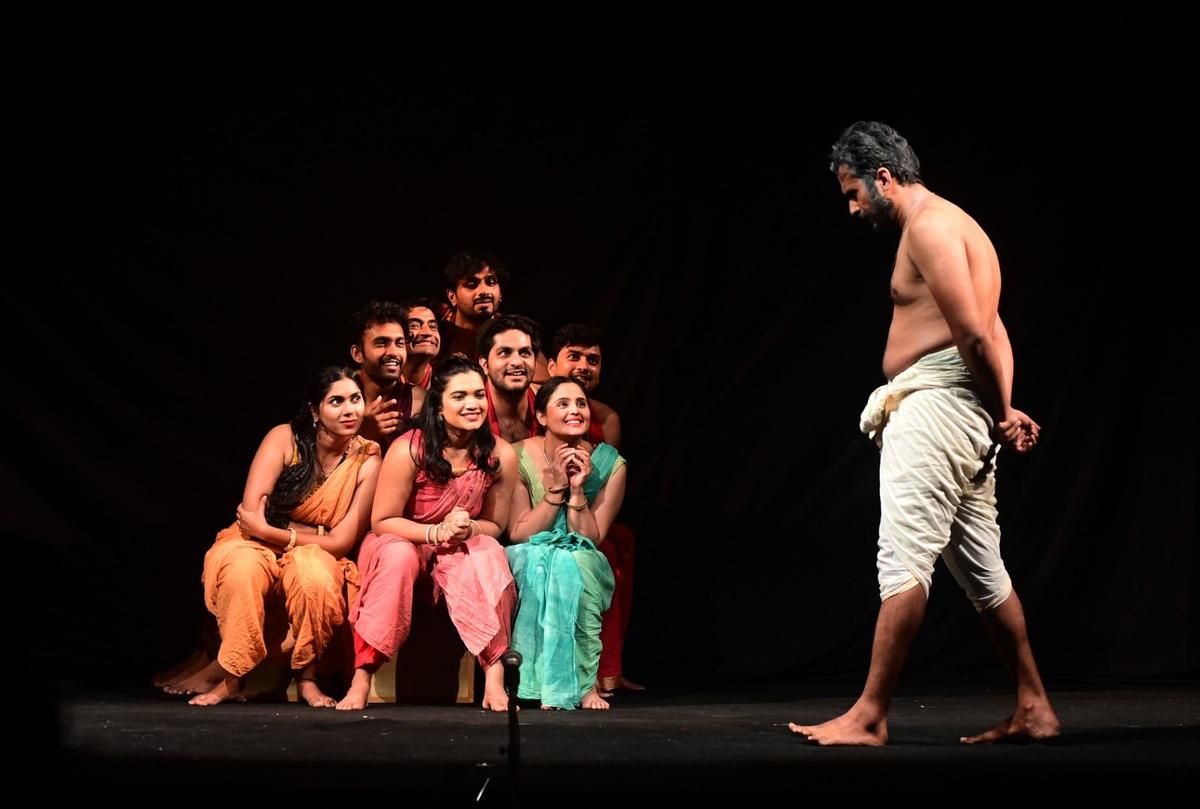
A scene from the play with Abhinav as the yogi
| Photo Credit:
Courtesy: Punaha Theatre
This ancient tale finds its adaptation in English as Yogi vs Bhogi, directed by Mahesh Dattani and staged by Punaha Theatre. Mahesh’s retelling probes the complexities of gender — its expression, perception, spectrum and stereotypes — with humour and catharsis. The production fuses contemporary theatre’s physicality with the traditional dance‑drama of Yakshagana, creating a performance where classical text and rhythm meet seamlessly.
It is within this world that actor Abhinav Grover’s journey as the yogi unfolds. Born in Haryana to Punjabi parents, raised in Rajasthan, and later drawn to Udupi in Karnataka through his studies at Manipal Institute of Technology, he discovered theatre as a calling stronger than engineering. He speaks about how destiny lured him towards Kannada and Yakshagana.
“During college years in Manipal I ventured into theatre and was hooked. After studies, I headed to the Drama School Mumbai, which was an eye‑opener. I had amazing teachers who said: ‘Don’t think you have become an actor; you are now a student of acting for life and continue to learn forever.’”
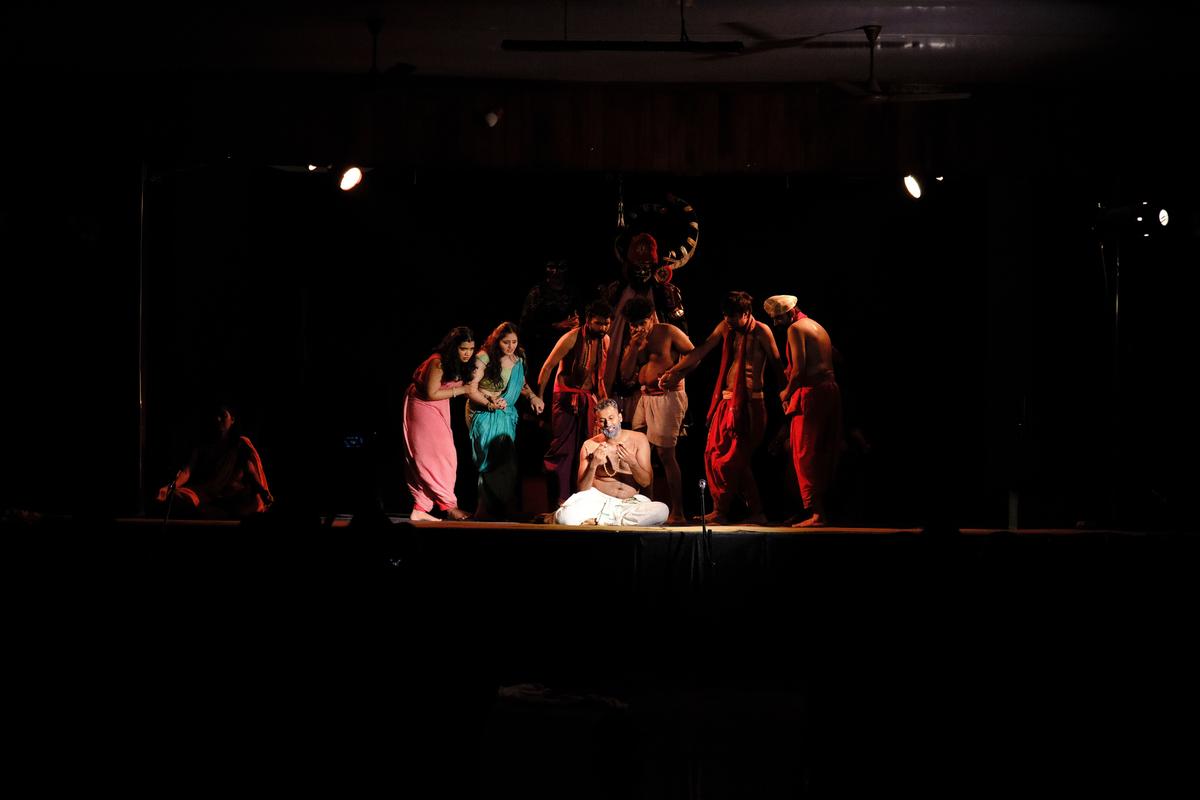
The moment where the ascetic’s body is seized by the courtesan’s soul, turning him into a vessel of chaos and desire
| Photo Credit:
Courtesy: Punaha Theatre
“At Drama School Mumbai, I struggled to relate to Western physical theatre, unable to grasp its language. Neeraj Kabi was one of my teachers. He chose to work with a module on epic theatre where he used Bharatanatyam and Odissi to direct Hamlet. For the play, he collaborated with Yakshagana teacher Sanjeev Suvarna, who later became my guru. I found it tough to emote through dance or movement.”
Then a conversation with Neeraj Kabi became a turning point in Abhinav’s life. “I told him I was from Udupi when I introduced myself, but did not know Kannada or anything about Yakshagana. He asked me, ‘you have been there all these years, yet not experienced its arts and culture?’ That remark stuck with me. Till then, I was under the impression that I wouldn’t need to learn other art forms being a contemporary actor. That’s when I realised why I was not able to express myself through movement. I returned to Udupi and immersed myself in learning Yakshagana at Yakshagana Kendra Udupi and Yaksha Sanjeeva Yakshagana Kendra for seven years.”
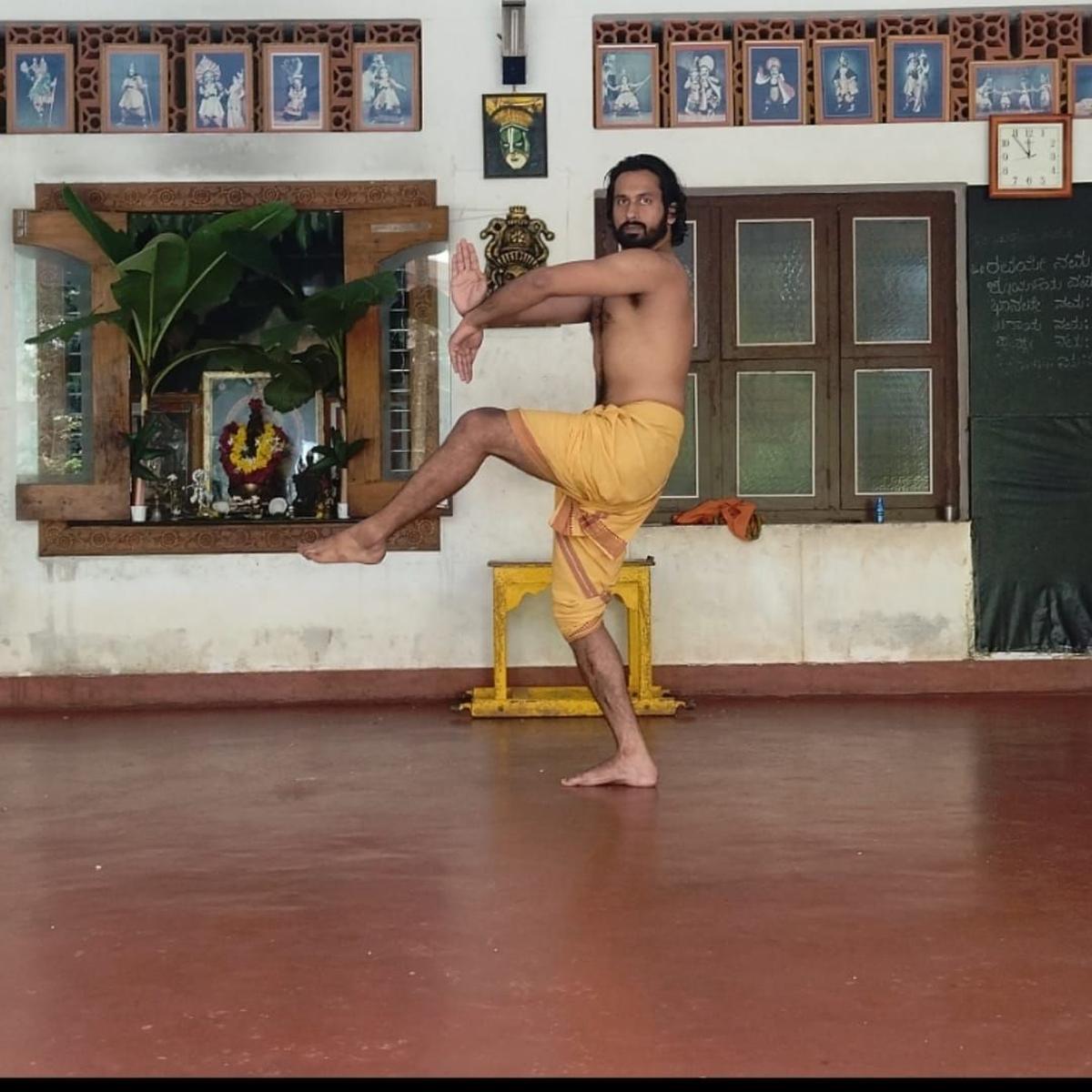
Abhinav practising at the Yakshagana Kendra, Udupi
| Photo Credit:
Special Arrangement
Living in the gurukul came with its own set of challenges. “Mornings and evenings were spent in Yakshagana training, while days were devoted to working in a college. Learning Yakshagana was transformative, though I began late — at 21. I felt like quitting after a month as I did not understand rhythm or the language. The credit goes to my guru who refused to give up on me, saying ‘rhythm is in the heart — when the heart is beating, how can there be no rhythm?’ He began speaking to me in Hindi and told me that language cannot be a barrier in learning an art form.”
Soon, months turned to years, “my body started adapting, mind accepting, I adjusted to the gurukul life. At first, the early dawn‑discipline felt impossible, its repetition numbing. Yet guruji’s unspoken rule revealed discipline as a holistic path — Yakshagana is total theatre — training voice, singing and acting. Meals were cooked collectively, Sundays brought visiting teachers. The gurukul was an oasis where art was absorbed as much as taught and I gradually learnt to speak Kannada too,” shares Abhinav.
By 2017, he headed back to Mumbai, working there till 2020. His first big celluloid break came with Rocket Boys, followed by The Railway Men with Kay Kay Menon and R. Madhavan, where he portrays the character of Adil. Then came Superboys of Malegaon, Lucca’s Two Hemispheres, and most recently Ikka alongside Akshaye Khanna and Sunny Deol.
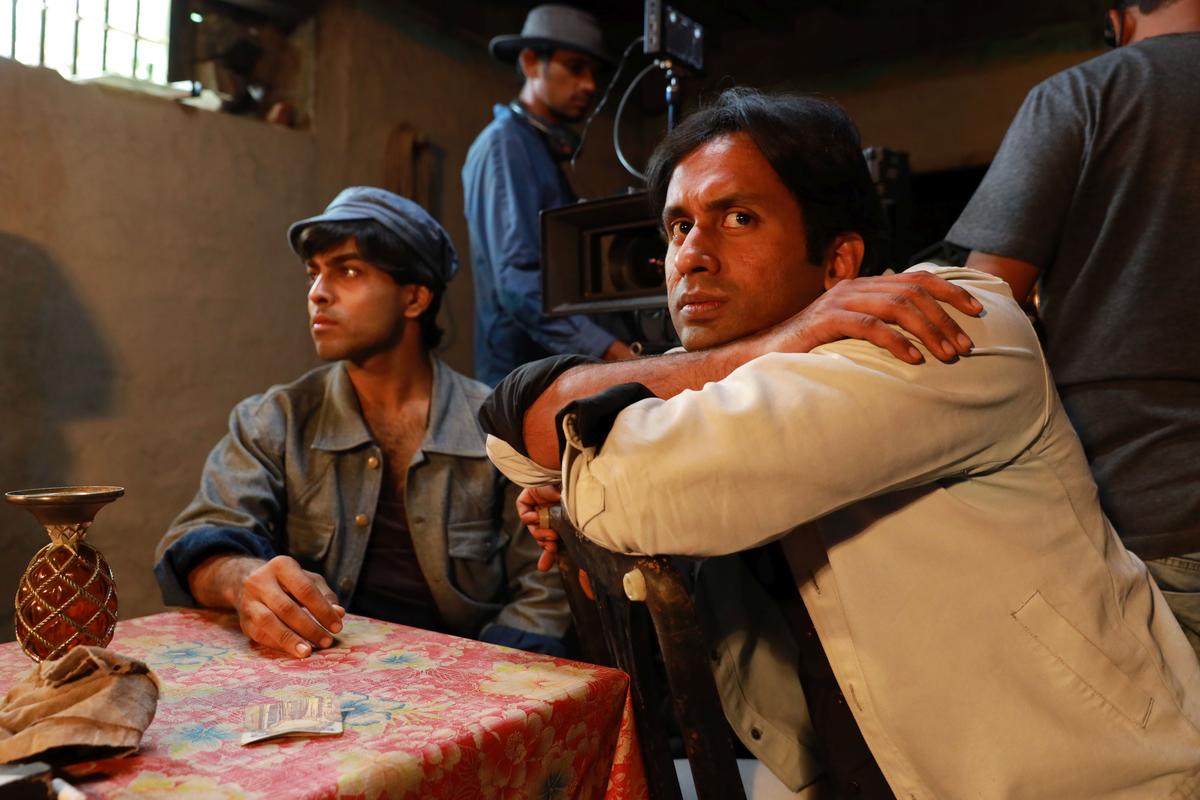
Abhinav in a still from Superboys of Malegaon
| Photo Credit:
Special Arrangement
Back in Udupi during COVID, he co‑founded Punaha Theatre with Venu Madhav Bhatt, staging Harold Pinter’s The Caretaker and now Yogi vs Bhogi. Over time, he not only mastered Yakshagana, but also started directing and acting in Kannada plays. This journey now finds its expression in Yogi vs Bhogi, where Abhinav plays the yogi — a role that resonates with his own transformation from a hesitant student to disciplined performer, embodying the ascetic whose soul is interchanged with the courtesan. “In Yogi vs Bhogi, I even speak a few dialogues in Kannada. Despite being an English play, Yogi vs Bhogi retains all its songs and some dialogues in Kannada. Retaining them was important to preserve the cultural resonance,” says Abhinav, who also directed his first Kannada play — Girish Karnad’s Agni Mattu Male — infused with Yakshagana.
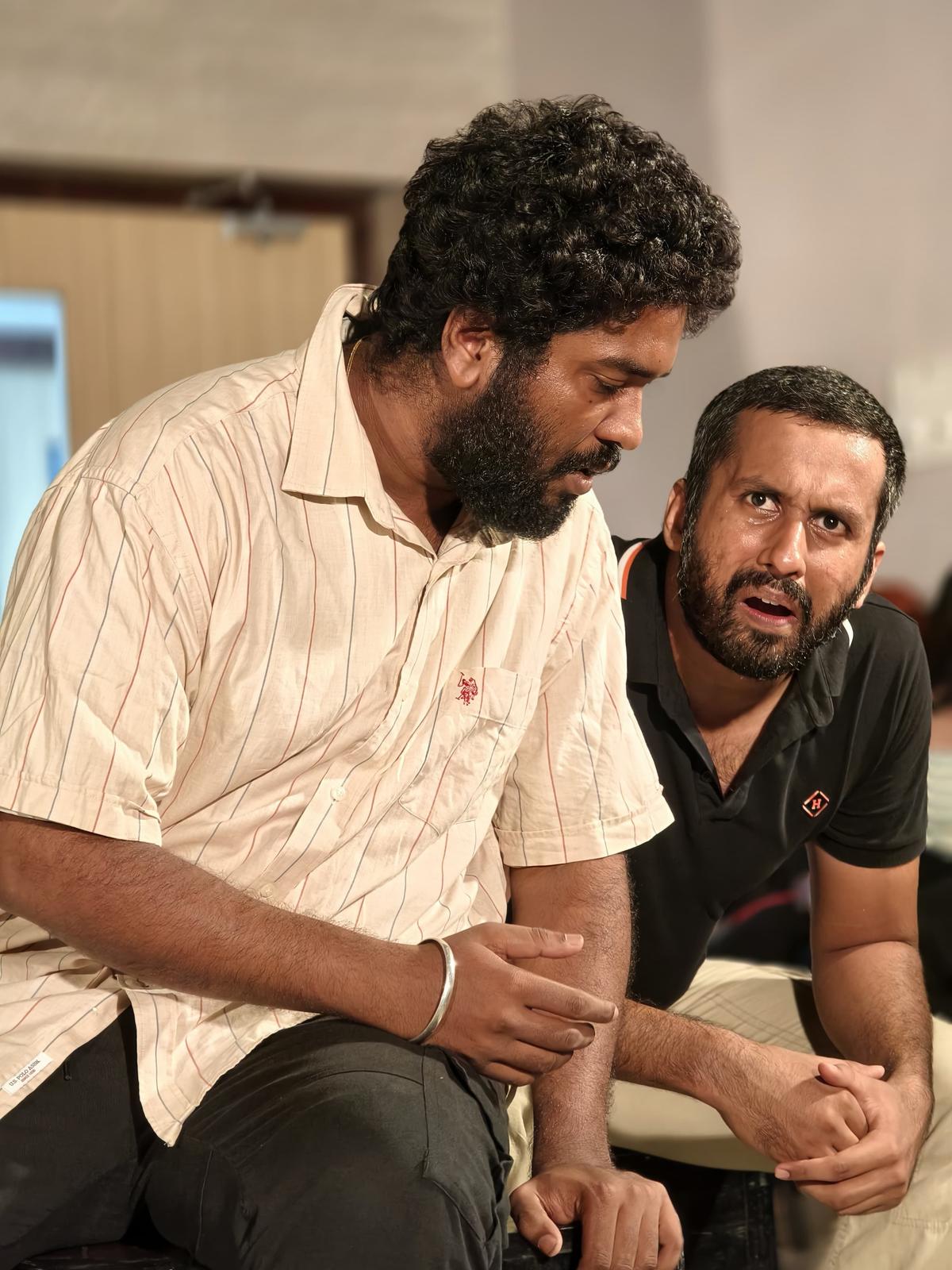
The actor was also a part of the Kannada, an anthology titled Mooru Chhote
| Photo Credit:
Special Arrangement
Yogi vs Bhogi juxtaposes masculinity and femininity, humour and philosophical depth, speaking concurrently on metaphorical and existential levels. The production brings together talents from Mumbai — Abhijeet Singh, Aryan Tandon, Rishabh Kanti, and Anjana Aluwalia — alongside actors from Udupi and Abhinav himself. Together, they create a layered performance that blends languages and traditions without losing coherence. Yakshagana is used to portray the character of Yama, while traces of Kalari shape the character of the snake. Though staged in English, the play feels deeply rooted in local culture. Mahesh Dattani even uses silence as a powerful tool of humour.
As for Abhinav, he looks forward to exploring other varied folk forms of Karnataka and weaving them into his plays. For the moment, he making the best of both worlds — screen and theatre.
Yogi vs Bhogiwill be staged on May 23 at Jagriti, Whitefield in Bengaluru. Visit Jagriti’s home page for details and tickets.
Published – May 11, 2026 07:44 pm IST
[ad_2]
Source link

 Total Users : 10284370
 Views Today : 1558