

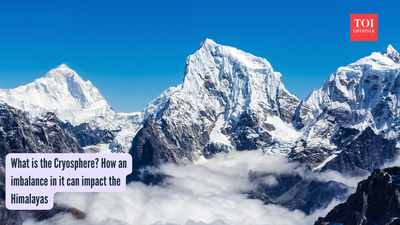
The Earth has many layers in the atmosphere that help sustain life on the blue planet, and while the cryosphere might sound like another scientific term, it is just Earth’s frozen parts.
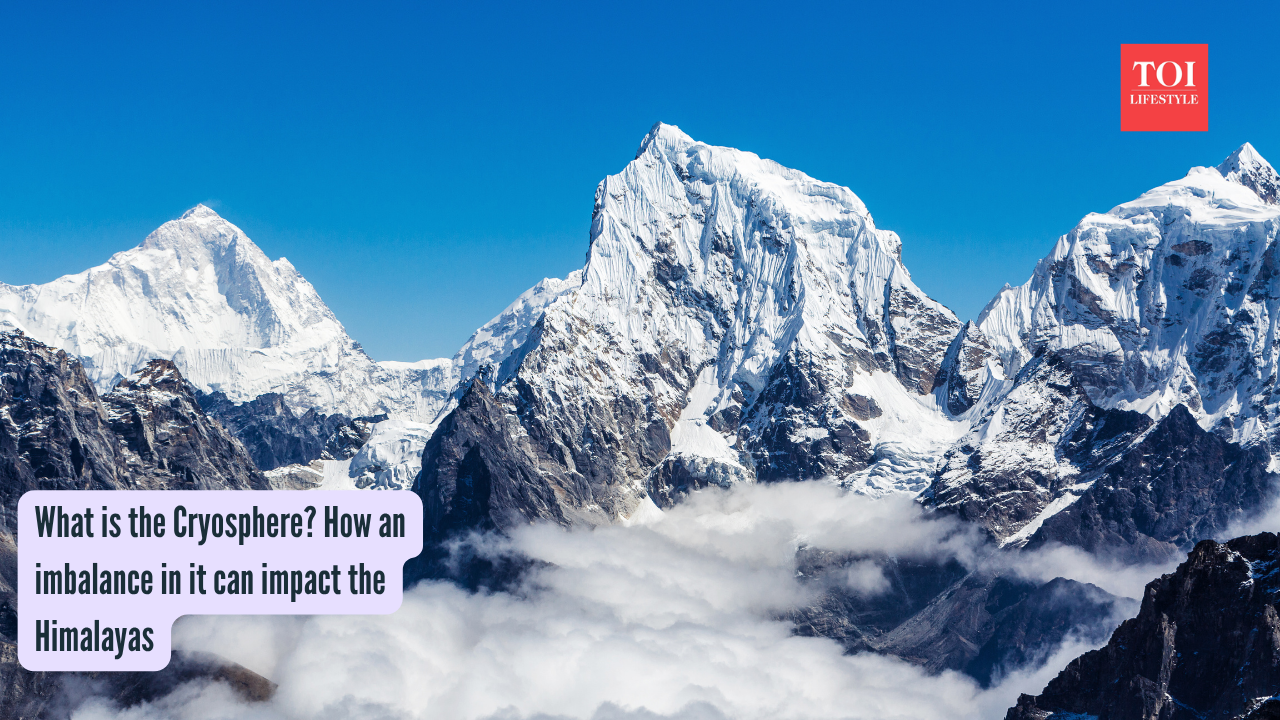
Representative Image- Himalayas (Photo via Canva)
What is the Cryosphere?
The cryosphere is all the frozen water on Earth. This includes big, permanent ice sheets and glaciers, along with the seasonal depositions like snow cover and sea ice. Althought this layer is mostly found in cold polar areas and high mountains, it affects the whole planet.It keeps our climate in check by reflecting sunlight to cool things down and regulate Earth’s temperatuer. It controls sea levels,and controls melting land ice raises oceans. Plus, it stores fresh water for rivers and people.Even if you’re far away and do not live in icey cold regions, this icy system also influences your weather and water supply. When the ice cover melts too fast, we all feel the changes.
What impact can its imbalance create?
As climate change is increasing the temperature of the surroundings, this frozen world is melting faster, creating a ripple effect worldwide. Especially in the Himalayas, called the “Third Pole”, the changes are especially worrying as glaciers here feed major rivers that millions depend on.
How do changes in the cryosphere impact global climate regulation
Ice reflects sunlight, cooling Earth. Melting exposes dark surfaces that absorb heat, speeding warming, and ends up in a feedback loop. It is all like a cycle, land ice melt raises sea levels, threatening coasts. Fresh meltwater disrupts ocean currents and salinity, changing the global heat flow. Permafrost breakage releases methane and CO2, worsening climate change.
Cryosphere in the Himalayas
Even though India has a tropical monsoon type of climate and cryosphere still spans the higher altitudes and colder regions like the Himalayas in Ladakh, Himachal, Uttarakhand, Sikkim, and Arunachal.Glaciers, snow, permafrost, and lakes feed Ganga, Brahmaputra, and Indus rivers. They support water, irrigation, hydropower, and monsoons for millions downstream.
How do changes impact the Himalayas
According to a study published in the Frontiers, “Several natural disasters are directly or indirectly related with this interactive hydro-cryosphere”. Himalaya disasters like GLOFs, avalanches, landslides, and floods link to melting ice and water systems. Climate change plus human activity has caused deterioration in recent years and impacted water, food, energy, tourism, and health. We must understand these ice-water connections to plan for climate adaptation, security, and sustainable mountain futures.
Hazards from imbalance
Rapid glacier melting forms unstable lakes, causing GLOFs or Glacial Lake Outburst Floods like Sikkim’s 2023 South Lhonak flood or 2021 Chamoli disaster. It weakens slopes, causing landslides and flash floods with heavy rain. Cryoseisms from freeze-thaw cycles meean permafrost instability, increasing disaster risks.

 Total Users : 10195043
 Views Today : 178