


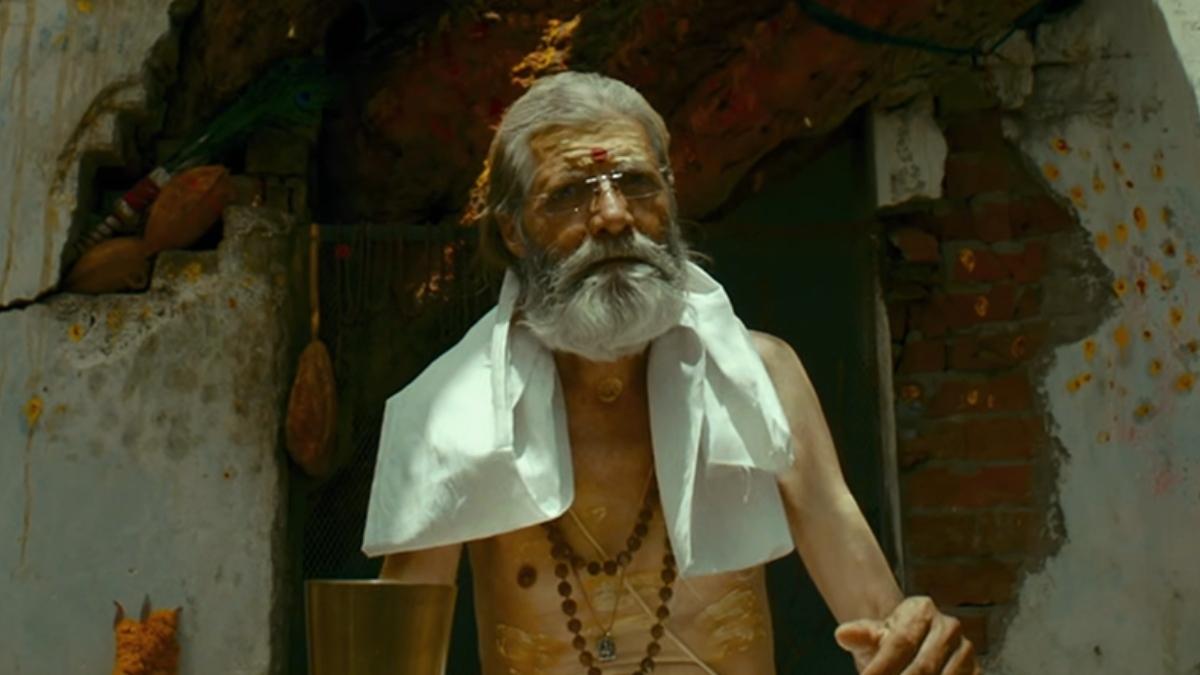
A still from ‘Dug Dug’
| Photo Credit: Flip Films
After a drunken Thakur Lal, driving in a daze, dies in an accident on a desolate Rajasthan highway, his modest Luna or Dug Dug bike begins mysteriously returning to the crash site despite being locked away at a police chowki by seemingly clueless policemen. This inexplicable event sparks rumours, then belief, and eventually a full-blown cult. A priest suggests devotees offer Thakur’s favourite items to the ‘divine’ two-wheeler. Soon, followers start pouring alcohol and offering bidis at the site with the hope that their wishes will be fulfilled. What starts as a quirky mystery evolves into a commentary on the rapid birth, intoxication, and commercialisation of a new religion.

The independent film is a sharp socio-religious satire inspired by a real-life phenomenon in Rajasthan where people found god in a machine and cleverly uses absurdity to explore how faith, superstition, and commerce intertwine in rural India.
Debutant Ritwik Pareek excels at showing how blind faith takes root — not through preaching, but through deadpan absurdity, montages, and collective rationalisation. The stylistic flair in his storytelling generates a hypnotic effect. The neon-lit nights, stark desert landscapes, and the banner of a magician at the crash site pull you into the narrative. The rhythmic editing and a jazzy soundtrack lend it a mysterious energy. The way the bike is shot makes it feel eerily alive.

A still from ‘Dug Dug’
| Photo Credit:
Flip Films
The film doesn’t run down the faith of the devoted. Unlike purely cynical takes on religion, Dug Dug shows genuine curiosity about why people need belief, especially in isolated, hardship-filled lives where the divine takes shape in the exhaust fumes of despair. This detail makes the satire richer and less judgmental. As it expands, it conveys Indian realities such as roadside shrines, the miracles that go viral on social media, the entrepreneurship of priests, and, more importantly, the comfort that faith provides.
It is not that the thought is rooted in a distant past. While watching it, one’s mind goes to the stray dog in Western Uttar Pradesh that became a viral sensation this January after being seen performing circumambulation around temple idols for hours without food or water.
After the fascinating build-up from hypnotic road drama to broad absurdity, unraveling the psychology behind faith, the storytelling in Dug Dug gradually feels repetitive, leaning a little too much on montages of the cult’s growth rather than focusing on individual character arcs. While vision and style set the stage, it is character development that drives a compelling narrative. The metaphor of a swelling balloon starts as an innovation but becomes a crutch. The characters seem deliberately underwritten to mask the actors’ limitations, but the gamble fails to foster emotional connection. However, despite pacing issues and a lack of character depth, Dug Dug breathes life into the shrinking indie scene, offering an empathetic and timely critique of religious fervour.
Dug Dug is currently running in theatres
Published – May 08, 2026 07:35 pm IST

 Total Users : 10192567
 Views Today : 860